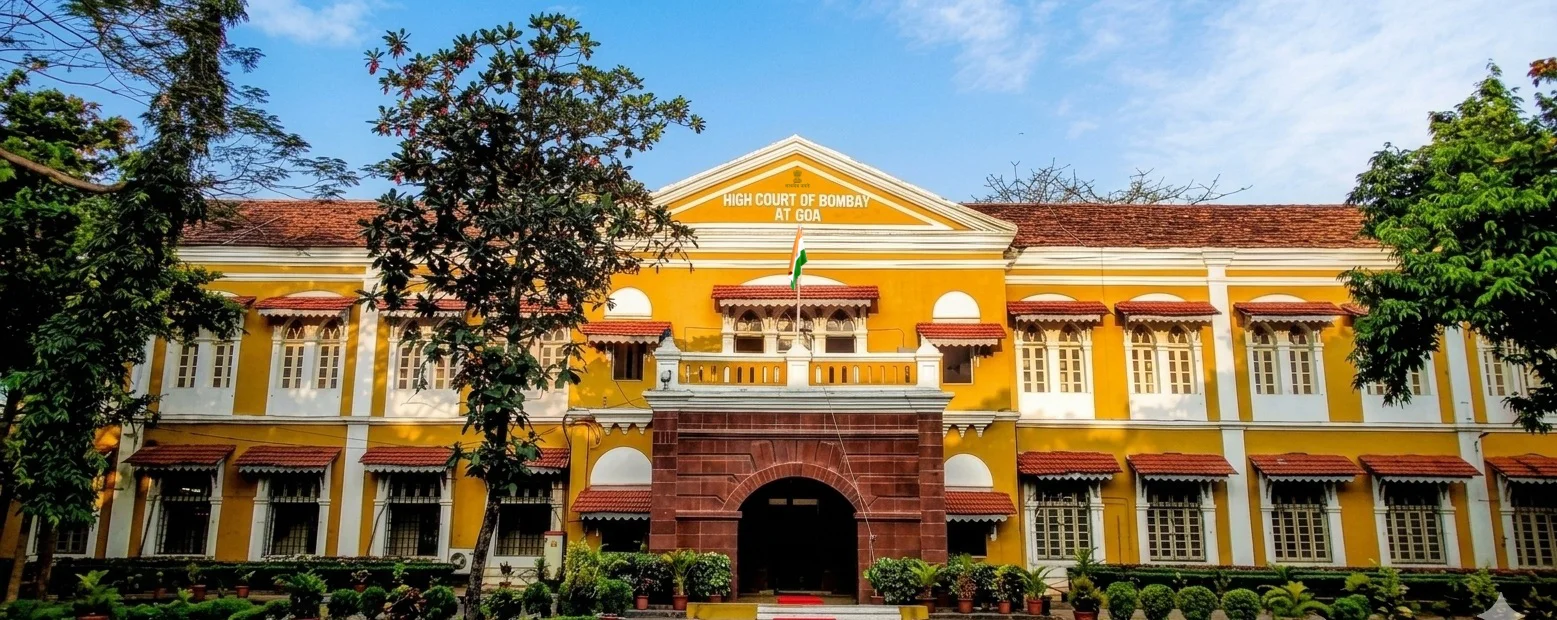





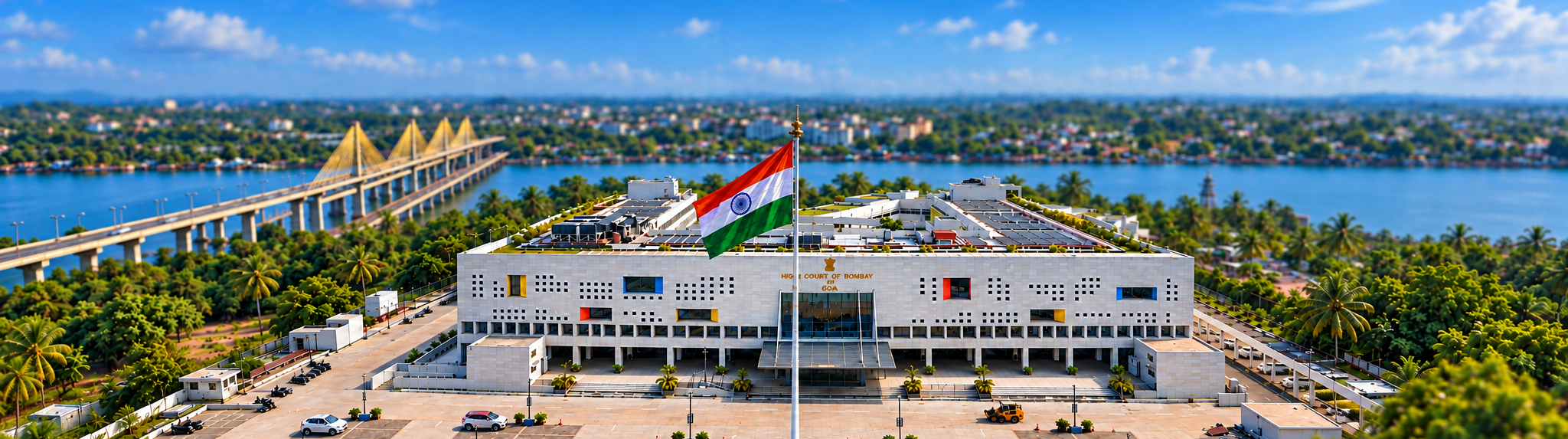
A Brief Legal History of the High Court of Bombay at Goa
The territory of Goa is situated in the West Coast of India and bathed by two great rivers,
the Mandovi and Zuari. It was under the sway of Kadambas dynasty, later the territory came under Yadavas of Devagari and then under
the dynasty of Adil Shah of Bijapur. The Portuguese conquered Goa in February 1510, lost it and reconquered it in November of the same year.
Goa continued under the Portuguese till it was liberated in December 1961.
When Albuquerque conquered Goa in 1510 A.D. the administration of Justice was vested in village communities.
In the early days of Portuguese rule, justice was dispensed by a judicial functionary called the ‘Ouvidor Geral’
who exercised both civil and criminal Jurisdiction in the settlement. In 1544, a High Court presided over by a Chancellor
was organized under the Appellation of the ‘Relacao de India’ having its seat in Goa but its Jurisdiction extending over
all the Portuguese positions in the East. Hence one can say that the original Tribunal de Relacao was founded in the year 1544.
It had Five Judges in the Bench at the time of Liberation. The same was replaced by intervening judicial Commissioner’s
Court which had lesser power than High Court. The Judges of the High Court were known as ‘Desembargador’ subsequently several alterations
were effected in its constitution. In 1774 it was abolished and again an ‘Ouvidor Geral’ was solely invested with the powers conferred upon
and exercised by this defunct Tribunal. Appeals would be heard necessarily by bench of not less than three Judges.
There was no practice at the level of the High Court for appeals heard by one Judge.